Tutoring and Learning Center for K-12th grade kids in math, reading, writing and science. We are partnered with The Princeton Review to provide SAT exam prep classes. We offer ABC Music and Me powered by Kindermusik for the pre-schoolers. We are your all encompassing learning center. Athena, Where Learning is Within Reach
Showing posts with label tutoring College Station. Show all posts
Showing posts with label tutoring College Station. Show all posts
It's Friday fun day! Just a little something to get you in the mood for the weekend. Any teachers out there feel this way? Probably a majority of them at one time or another, am I right? Hang in there teachers! It's almost summer!!!
The SAT is right around the corner. Don’t sweat it. We have the tools and strategies you need to get a better score, guaranteed.
To start you off on the right foot to success with the SAT test, it's best to first find out where you are and what your weaknesses are. Then you can focus on those areas to develop a study plan. Athena Learning Center of College Station is your partner in success whether it is for extra tutoring in core subjects like math and algebra, reading and literature or any of the higher level sciences like physics, chemistry or biology. We also offer SAT test prep classes.
SAT test prep classes
Athena is partnered with The Princeton Review to provide a full spectrum SAT test prep course. We are having a free SAT practice test on April 23rd. Register at our website. This is a great first step to see how you will do on the all new SAT exam. Our full courses will begin this summer starting in June. Be sure to check out our website for dates and registration links. If there is anything we can do or any questions you may have, don't hesitate to call or drop by and talk to Michelle. Be sure to sign up at the end of this post!
Here are some free math ideas to keep those young minds sharp. Nothing sparks learning in a child's mind faster than having fun while being taught new ideas or re-enforcing already learned concepts. It's good to take advantage of holidays to incorporate not only the occasion but learning opportunities as well. Here at Athena Learning Centers, one of our tutoring concept motto's is Always Be Learning!
Ignite the math spark in your classroom with these activities for math that are Easter and spring themed . Students enjoy sorting, graphing, adding, ordering, journaling and more since many of these math activities have a free download. With this range of inspiring ideas, your primary mathematicians will definitely enjoy the colors of spring as they work on building their math skills.
What’s your spring or Easter math idea? We’d love to have you share your tip, free download or tutorial. Be sure to share it with teachers in the Teach Junkie community and I’ll see that it gets organized into the place where you’ll get the most spotlight. Plus, I feature lots of ideas like yours in a goodie bag post. Don’t you just love how sharing and generous teacher are? Find more free downloads that are just as fantastic!
Our kids are under a lot of pressure these days to perform. This can lead to a high amount of anxiety right before a major school test which can impact how they do on the test. Here are a couple easy to do exercises that will greatly reduce their worries and help in their test taking.
Expert Annie Murphy Paul shares two techniques where kids put pen to paper and scribble their worries away.
Out of the favorite times of the year, Christmas is usually tops on everyone's list. Social media has a love affair with Christmas time as well, especially cute animal holiday pictures. Not to be outdone, enjoy one of the cuter ones I've come across.
Combine education with fun and you have a winning combination! Here's a few ideas on getting creative with Halloween. Some of these might even make your kids scary smart!
How do you plan to celebrate Halloween in your classroom? Will you have a costume parade, throw a Halloween party, decorate pumpkins, or pass out lots of candy? These and other similar activities will only add to children’s excitement about the holiday, but Halloween-related activities aren’t usually the most educational of activities you can plan for students. In fact, some people may say that these types of activities are a waste of time and resources.
While you can argue that Halloween activities promote family engagement and community in the classroom, intentional teaching (consciously planning activities that have specific purposes) can help you silence the naysayers and make Halloween more educational for kids. Here are four ways you can create satisfying (and fun!) Halloween-related learning experiences for the children in your care:
1. Share Fun Facts - Did you know pumpkins are a fruit? They’re actually berries—yes, berries (we were shocked, too). Providing fun, interesting facts about pumpkins, bats, and other Halloween-related objects and animals can help make any Halloween activity educational for kids. Helpful Tip: Turn the fun facts you come up with into a trivia game that students can play during your Halloween party or while they’re decorating pumpkins.
2. Go Beyond Arts and Crafts - Take students to a local pumpkin patch and let them pick out their own pumpkin for decorating. This is a great opportunity for children to learn about how pumpkins are grown. If you don’t have the budget to go on a field trip, read Pumpkin Pumpkin with your class or ask a local pumpkin farmer to come talk to your class about the growing process. Helpful Tip: Before children decorate their pumpkin, have them record their observations about the pumpkin’s size, color, shape, and other features. You can use their data to create fun and relatable math charts and word problems.
3. Learn About Various Halloween Celebrations - Halloween has a long history and is celebrated in a
number of countries, which gives you a variety of opportunities to teach children about history and diversity. For example, you can discuss how Halloween began in Ireland or share how people in Mexico honor their deceased loved ones on Día de los Muertos (the Day of the Dead). Helpful Tip: Have children create and design a booklet about different Halloween traditions around the world. Make sure you ask them to include their own Halloween traditions.
4. Turn Your Halloween Party into a Halloween Math Party! - Have children estimate how many candy corns or roasted pumpkin seeds are in a jar. Pass out candy and ask students to count or sort their candy pieces. Older children can also use candy pieces to make fractions or practice addition, subtraction, multiplication, and division. Helpful Tip: Invite parents to come to your Halloween math party and/or take pictures of students solving math problems and enjoying their snacks. You can post the pictures you take on your classroom blog or send them to parents in an email or newsletter.
So what is your creative idea to keep the kiddos learning? Don't let all that candy turn their brains into mush. Leave us a comment with your best idea.
Tutoring and affordability is a subject that is very near and dear to our hearts here at Athena. We deal with it every day. We would love to see professional, quality tutoring available and affordable to every child who needs it. While our legislature has made some attempts to deal with the problem, they are often short sighted and lacking. What's worse, the children who some of these programs were designed to help the most are often ineligible due to technicalities that weren't very well thought out. This article deals with the subject very well. Look for more insights at the end.
Have you ever struggled in school? A common solution to that problem is to hire a tutor. However, a problem today is the lack of affordable tutoring for those in need of it. Providing more academic aid to students can help them get better grades and hopefully get into a better college.
The fee for a tutor can range from $10 for a high school student to $75 for a certified teacher per hour. This can be extremely expensive, especially if a student receives frequent tutoring. Students and parents in lower income areas may be unwilling to spend that extra money or be unable to afford it, but students who can afford it gain an advantage over others who cannot and have been shown to have significantly higher mean scores in both language arts and math standardized tests when compared to an untutored control group.
In 2012, over 50% of students in U.S. public schools were considered low income for the first time in
at least 50 years. A lack of affordable tutoring is an increasingly large issue that now affects the majority of public high school students and the gap between low-income and wealthier students is only increasing.
Students should be given as equal a chance as possible to do well in school, regardless of their economic situation and should be able to receive extra help if needed. Tutors can focus on a specific student’s needs, which is often hard to accomplish in large groups.
It was due to similar concerns that Congress passed its No Child Left Behind Act in 2001. The goal of the act is to provide federal funds to schools with poor students and “improve educational equity for students from lower income families”.
Although the act can also cover tutoring costs, less than 15% of eligible students are currently receiving it. Also, districts are only qualified if they attend Title I schools, which are school districts with at least 35% of students’ families categorized as low income. Students are qualified if they attend the district and receive a free or reduced-price lunch.
Much more can be done to raise awareness of these programs and further encourage students to seek tutoring, especially if the costs are covered under the act. Since the program already exists, people should be encouraged to us it. However, one issue with the No Child Left Behind Act is that it caused a rise in companies charging the maximum covered by the act of $2,000 per student for 50 hours for unqualified tutors. This problem can be solved by an increase in oversight and increased monitoring of the tutoring companies, which would save money being spent on overpriced, unqualified tutors.
While the No Child Left Behind Act does help many of those who need it, it only targets those in
relatively high-poverty areas. Those attending school districts that don’t meet the criteria or whose families are not considered low-income are not affected, even if they need it.
A solution to this problem is volunteer tutoring. Many high school and some college students are required to provide community service and many are members of community service organizations that are willing to help. Tutoring could also be beneficial to the elderly and retired - a study in 2009 indicates that tutoring can delay or reverse brain aging in the elderly. Another study found that tutoring led to measurable improvements in physical activity and mental health of the tutors over those who did not.
Organizations such as the Experience Corps, which tutors in 22 cities across the nation, are already working with the interested elderly. Tutors receive no income other than “an annual stipend of about $2,800 that helps cover transportation costs, school lunches and occasional treats for the kids”.
Programs like the Experience Corps should be more widely implemented and in more flexible groups so that a wider range of people can participate. Funding could come from donations and from states or the federal government. Funds are already being used for the No Child Left Behind Act and some could be used for volunteer programs, which could also reduce existing costs for other tutoring under the act.
What amazes me is that well intentioned programs like No Child Left Behind can have such overarching requirements like the child can only be in a Title 1 school. So basically, if you are a poor kid in a rich school, you are out of luck. I understand the thoughts behind it like richer schools should be able to supplement tutoring for poor students easier than poor schools, instead of having nicer football stadiums, or huge marching bands, or....I better just stop there. And don't get me started on blithely handing out ipads to every student thinking this will magically jump them into the 21st century. See an entire article we published about that here: http://athenabcs.blogspot.com/2015/10/why-ipads-and-chromebooks-wont-save.html
So what do you think? What are some of the more pressing concerns we have when it comes to our poorer students? How can we help them best? Leave your comments below.
Veteran teachers know that from now until after the holidays, it will be a little more challenging to keep the students engaged in what’s going on in the classroom. A good strategy is to incorporate some of the themes that are surrounding them once they leave the campus.
Here are some fun, yet challenging lesson ideas for incorporating autumn into each subject area’s curriculum.
Science: Now’s the time for photosynthesis
Fall is the biggest time of year for photosynthesis. After all, if it wasn’t for the change in the ability of plants to create energy, their leaves wouldn’t fall in the first place. When studying photosynthesis, you can make the lesson as complicated as you want depending on the grade level you’re trying to reach, including various experiments with healthy plants. Age-appropriate explanations for why leaves change color can be found at Science Made Simple.
Math: Get out the pumpkins!
Pumpkins are a natural ally to math teachers everywhere. They come in a variety of weights and sizes, or circumferences and radiuses for geography teachers. Smaller children love to carve them up and use the seeds for various arithmetical exercises, while the older kids can start working on more complicated tasks including building their own pumpkin-chucking machine for studying trajectory and laws of motion. They make the room smell nice, too.
Social Science: Track the foliage
This works particularly well as a teaming activity with a science teacher studying photosynthesis (see above). A good place to start is the national foliage map from the Weather Channel. Using various data found online, students can start piecing together what is happening with the foliage around the country. See if they can make some friends on Skype in a place where the colors are quite different from home, especially if you’re teaching in an area where the leaves don’t change. Advanced students can create their own foliage map based on temperature data and other factors.
English/Language Arts: It’s Poe time!
Frankly, the work of Edgar Allan Poe seems out of place in any other season. The imagery is a bit cold and dark, just like fall. Aside from reading his poetry or short stories, take some time to introduce the concept of gothic horror to the students and ask them to create their own stories in the same tradition. Sharing is also important. When students create any writing, it should be written to be read by more than just their teacher. Find some works from other authors with unreliable narration or suspense and run a comparison.
The Next Level
Have you had success with any other fall-themed lesson units? Educate us in the comments below.
If you thought this article brought up some valuable points, please share it among your social networks using the buttons.
And if you feel your child needs a little more help preparing for this rigorous new curriculum, please find out more about Athena’s tutoring services.
This is a really timely article for today's schools who think buying every child an iPad or laptop is going to help develop them into better learners. Too often in our society today the answer seems to be to throw more money at the problem....and boy do we! School spending is up and grades are down. The rally cry is we need more money and since the state won't give it to us it's their fault our schools are failing. What's the old saying about throwing good money after bad? Read on and let me know what you think in the comments.
THE FOUNDER OF KANO, A KID'S COMPUTER, SAYS DIY IS BETTER THAN OFF-THE-SHELF.
Alex Klein is the co-founder and CEO of Kano, which creates computer and coding kits for all ages, all over the world. His reporting and writing has appeared in Newsweek, the New Republic, New York Magazine, the Nation, the Times of London,BuzzFeed, and other publications.
Three years ago, in a cold North London classroom, I asked some skeptical 3rd-graders three questions:
1. "Who here has seen the inside of a computer?" No hands went up.
2. "Who here can tell me how a computer works?" The room burst to life. "It thinks with electricity and sends waves to the Internet." "It uses a SIM card to make pictures." Excitement without understanding.
3. "Who here thinks they could make a computer?" Silence again.
Then came the prestige: "Well today, you’re going to build your own computer. You’ll fill its memory with new ideas. You’ll talk to the Internet with simple words. You’ll wire up a speaker. And you'll do it all without me saying a word."
We gave each student a prototype Kano computer kit to build and code: a box of open-source bits, and a simple storybook. In an hour, they’d built the hardware, hacked the desktop, and programmed Minecraft instead of just playing it. With code, they created their own games, songs, and shortcuts. They built virtual castles in one-click, instead of placing one block at a time. Making was the game.
Around the same time, a Los Angeles school district was asking its principals a different question: "If you could design the school of the future, what would it look like?"
The answer from most: Shiny screens! eLearning! Kids flinging polymonials like Angry Birds across magic tablets!
The district bought thousands of iPads from Apple for more than $100 million. The powerful, shiny, closed screens were used to deliver good content that would have cost a fraction of the price if printed black-and-white on A4 paper. What’s strange is that not a single child will ever see the inside of what their $100 million investment bought. (Now they’re trying to get a refund.)
I THINK IT’S TIME TO CHANGE HOW WE APPROACH TECHNOLOGY IN THE CLASSROOM.
I think it’s time to change how we approach technology in the classroom. Computing is something you do, not just use, or buy. When we were kids, we learned biology by planting beans and hatching eggs. Today, we teach computing by handing out finished plants and full-grown chickens, then dare kids to work backwards to the ideas beneath.
After the iPads were returned, Los Angeles schools turned toChromebooks, the more affordable browser-only laptops, which run on open-source. But since these awesome web machines are designed as a direct funnel into Google, they won’t let you install native software, nor teach you much about what’s under the hood. Hacking the Chromebook is tough. Alphabet will pay you up to $2.71828 millionif you figure out how.
Why, in the age of computational creativity, when every school district,mayor, and R&B frontman wants to get your kids coding—creating with technology, not just consuming it—do we keep putting iPads and Chromebooks in students’ hands?
We still live in a world whose most popular operating system (Android) was written and shared freely by hobbyists and amateurs, in a solar system whose largest man-made satellite (the International Space Station) runs open-source code.
COMPUTING SHOULD BE ABOUT CREATION, AS WELL AS VOCATION.
Most agree that computing in class is a no-brainer. A window into the Internet is worth more than all the elementary school libraries in the world. But most kids have, or are soon to have, powerful networked devices in their pockets. So why double up when there are alternative ways to expand learning, outside of these closed devices, that can provide even more value, fuller preparation for the future? Computing should be about creation, as well as vocation, and to do so means intertwining open tools, tablets, and yes, even programming languages.
Some context on how closed, became simple, then became the default: In the '90s, we taught a generation how to use that decade’s versions of Word, Excel, and Powerpoint. Programming proper became the domain of "nerds," "savants," "geniuses." Now we insist you learn Javascript, or get left behind, and we teach it with devices whose warranty breaks if you run a "Hello World" script.
Today, we can do more. When USA Network hacker dramas are incorporating Raspberry Pi plot points, you know "making" is about to go mainstream. It’s time to drive that movement from the bottom-up, with classrooms that converge with makerspaces, and teachers that accept and enjoy that their students can and will surprise them with technology—not just with how well they use the pre-packaged features, but how quickly they break and remix them.
"The unwashed masses don't know the difference between eight and sixteen bits," quipped Maurice Goldman, a 1980s Apple ad guru, "much less between a mouse and a green screen." Today, kids and creatives want to know the difference. They can be inventors, not just users.
According to Cisco, there are over 8 billion devices connected to the Internet; according to IDC, less than 50 million computer programmers worldwide. This big gap throws us employment and inequality woes. So much of the modern world is made by so few, in closed labs and accelerators.
But there’s hope. At an early age, with screens all around, a young mind is well primed to start making—not just swiping. With Kano’s online world, a "kids GitHub," beginners in over 86 countries have created and shared thousands of digital creations on top of an open-source brain. In just over 9 months, with open, hackable hardware, a sense of play, and a simple story, that’s over 7.7 million lines of code. We introduce game mechanics and open playgrounds, and speak in a human voice. Then we let kids do the rest. In Sierra Leone, Kano has been turned into a radio station by a teenage hacker; in Oklahoma, a time-lapse camera to capture blooming flowers; in Kosovo, a solar automation station; in Minnesota, a game console (see Youtube video above).
Steve Jobs once called computing a "mind bicycle". Woz would have sold you a Mac in pieces, with a screwdriver. Today, we trust kids to swipe and tap for fun, but limit their creative screen-time. We’re turning code into a purely technical, pre-vocational skill, something for the Silicon Valley gurus. We present computing as something you only buy, but never do.
An iPad app that teaches Python is good—if your only goal is prepping for a programming job. A teacher, a story, and an open toolkit—say a Raspberry Pi, an Arduino, a Microbit—is better. They can make "making" into more than "something the factory does." We should show kids how technology connects with the arts, with history; how they can wield it to make a song, a game, a robot, a time-lapse camera, or a generative artwork. Even after school tutoring places in College Station are using more robotics classes and MindCraft type learning programs
As Dr Seymour Papert put it, computers in the class should not be "machines for processing children, but something the child himself will earn to manipulate, to extend, to apply to projects—thereby gaining mastery of the world."
Maybe it’s the fear of hacker stereotypes (the brogrammer in the basement, the boy getting shocked by a drive) that ushers so many sealed screens into students’ hands. Their one-size-fits-all simplicity works well for classrooms that don’t like surprises.
There’s a place for machines that "just work." In your left hand, you can hold a pre-made world—an iDevice to connect you to anyone you’ve ever met, to consume any form of media. But in your right hand, you should have a computer you make, an invention machine that asks a little bit more of your mind and soul—so you can do more than "just work."
The new generation, immersed in screens from birth, need the opportunity and inspiration to look under the hood. Our students need learning machines they can open up, build, code, and remix. As for our generation? We can start presenting technology as a medium for imagination—not just the shiny bribe that makes old-school learning seem temporarily fresh.
Being in the education business means you need to stay on top of issues affecting your line of work. Since education affects all of us, especially our children, it's critical to stay "plugged in" to the state of education in our nation and in our state. Outlined here are 10 that we as educators and parents need to be aware of.
Critical issues are those issues that are important to education. They are the barriers that get in the way, or the important elements that we need to focus on in order to move forward and offer better opportunities to our students.
Common Core State Standards - 46 states may have adopted the standards but around a dozen states are backing out or considering backing out of using them. Regardless of how people feel about the Common Core they have led to many hot debates about education, and will continue to do so in 2014.
Student Learning - Student learning is everything from different pathways to graduation, encouraging student voice in student learning, and encouraging them have a place at the table for larger conversations about their education (Lisa Nielsen's Innovative Educator blog that focuses on student voice). So often we focus on teaching, but it's learning that matters most.
Technology - Even after all of these years technology is still a hot button issues. Some people love it and use it flawlessly every day, while others hate it and don't see why they need to be forced to use it at all. In addition what makes it complicated is that some schools seem to have endless resources, while other schools have to use what wealthier schools disregarded as old. Whether its MOOC's, iPads, gaming or BYOD, technology will still be a critical issue to discuss in 2014.
Social Media - Twitter has exploded over the past few years. More and more educators are joining and finding members to their Professional Learning Network (PLN). What's even better is that they are sharing resources to use in their classrooms, buildings and districts, and they are also using it to connect for professional development (i.e. Twitter chats, EdCamps, etc.). Social media will be, and should be, part of a huge discussion in 2015.
Politics - Politicians have long mentioned education in their speeches but the past two years it seemed to have happened more than ever. Many politicians seem to focus on how schools are failing, and their only solution is standardization, accountability and high stakes testing. Many governors, like Andrew Cuomo, are running for re-election this year and education will no doubt make or break their campaigns. How many politicians, like Cuomo and Christie, have spoken about teachers is deplorable and this is the year when teachers continue to take control over that conversation.
High Stakes Testing - Not sure if you have heard of this before but schools across the country have to give high stakes tests to students. Some start it in kindergarten, while others begin in 3rdgrade. In most states they are tied to teacher/administrator evaluation and that will no doubt continue to be a big debate this year. There need to be different methods used to assess student learning, and none of it should be "high stakes."
School Leadership - If you go on Twitter, you will find hundreds of school leaders who consider themselves "Lead Learners." This is very important because they see the important part they play in the lives of their students, teachers and staff. In addition, school leaders understand that they can have a positive or negative impact on their school climate, and too many still have a negative impact.
Pre-service Teaching Programs - How can we get the best teachers into our classrooms when so many politicians and policymakers cry that schools are failing? Under those circumstances, who would want to go into the profession? Additionally, pre-service programs need to improve because many of the graduates do not seem prepared for the profession. The real question for 2014 is how can K-12 schools work with these programs to build a community of learners who are prepared for the profession? A little less accountability tied to testing would go a long way to improve this issue.
School Climate - A few days ago Secretary Duncan and Attorney General Eric Holder announced new guidelines to stop the school to prison pipeline and improve school climate. This critical issue is not just about bullying, but about creating an inclusive school climate where all students can achieve their maximum potential.
Poverty - We know around 22% of our students are living in poverty. We also know that many children who live in poverty come to kindergarten hearing 1/8th of the language (vocabulary) that their wealthier peers experienced. Many of the schools that try to educate these students lack the proper resources, and the communities where children in poverty live often lack the same resources that wealthier towns have. Poverty is an issue that is one of the most critical issues of our time, in and out of schools.
In the End
We have many critical issues facing education this year, and the larger question should be...How are we going to work together to solve them? I stopped with ten but probably could have gone on with a few more. What would you add to the list?
There are a lot of cliche sayings and politically correct messages floating about the hallways in today's education world. But what do they really mean and is there any action behind them? What's the state of education in America today and where are we headed?
Well, the good news is there IS a movement going on. Quite a few higher academic types are looking at past history and the present situation of the failure of public education and deciding that we can't keep on doing what we're doing. We are letting the next generation down if we sit on our hind ends and not seriously look at the problem from a higher level. This is a good article about one such movement in what makes kids passionate about learning, enjoy!
Among the most common phrases being used in classrooms, hallways, and mission statements these days often focuses on this one:
Preparing Students To Be Lifelong Learners
How are schools preparing children to become lifelong learners? In the early years, teachers try to model a love of reading and writing. They try to bring that joy into the classroom with activities that will engage and motivate young learners. In the higher grades, motivation and engagement remain on teachers' minds and in their lesson plan efforts. Discussions between teachers and leaders include the subjects of motivation and engagement.
Often the attention is on the student. What do they need to become more engaged and motivated? What is preventing them from being more engaged and motivated? It is always a good thing to pay attention to what each individual child needs, their life situation and their learning and social emotional needs. Yet do we socialize students from the very beginning to be confident lifelong learners? We might not.
What Messages Are We Really Sending?
Report cards begin arriving usually before the first snow falls in the very first year of school. In many schools today, at least in the early years, report cards provide a narrative description of the students' learning behaviors, accomplishments, progress and concerns. But as the years go on, more evidence backing those comments are needed and expected. What has traditionally provided that evidence are grades. According to Cathy Vatterott in her book Rethinking Grading, there are three central beliefs about grading that have dominated the philosophy behind grading. They are:
· Good teachers give bad grades,
· Not everyone deserves an A and
· Grades motivate learners (p. 15-16).
The tide is shifting and fewer and fewer educators believe these ideals. Grades are often not an authentic reflection of learning. The way we currently use grades contributes to other problems in education. If changing grading practices could precipitate broader changes in teaching and learning, it's possible that our mediocre academic standing in the world could be greatly improved. Now is the time for change (p.18).
Likely more educators support the idea that changing the way we grade could change the achievement of our students. It is time to move from using grades to sort and rank, to something more expansive, noting progress along the way to a continuously moving horizon, and not to an annual destination. One certain factor will be grabbing the attention of the learners and recognizing them as effective learners from their very first day...and carrying it on throughout their school career.
This is neither something that requires a series of professional development sessions, nor even the reading of a book. It doesn't take much time. Each individual teacher can do it differently. It only requires a conversation between the leadership and the faculty...and that the leader continue to remind the faculty at meetings with feedback and discussion, through walk through conversations, and sometimes even with notes and memos as reminders. Consider this one step.
One of the stated concerns of 5 year olds as they enter the school building for the first time is that they are there because they know little and that they will be learning "Kindergarten." The adults, too, communicate this way of thinking as students grow through the grades. After completing Kindergarten, students are promoted to the first grade, after completing algebra, students are moved on to geometry, after completing 9th grade English they are moved on to 10th grade English and so on. In each move from one grade or subject to another, there is an implicit (and sometimes explicit) message that a student is beginning again. In the paradigm in which the teacher remains the "sage on the stage," it is a natural feeling for the learner to feel like the empty vessel waiting for the knowledge to be released to them in segments by the teacher. The design makes it so. But as the design for teaching and learning continues to shift in this century, by encouraging teachers to become "guides on the side," an opportunity for engagement and motivation arises.
At the beginning of the school year, and as each new skill or piece of information is learned, make it clear to the learner that what they already know makes them ready to add this to their developing knowledge, abilities, and independence as learners.
· For students who have developed metacognitive abilities, adding questions like, "What might you already know that will help you learn this new...?" way of writing, vocabulary word, way of thinking about numbers....
· For others not yet adept at their metacognitive skills, showing them what you know they already know in an illustration, either for the class or individually, will not only help them see they are prepared and have knowledge on which to build, but will also model the essential reflective skill of metacognition.
Change the Culture by Beginning With The Teacher
Modeling this for teachers is the first step in guaranteeing the practice becomes part of the sustained practice of the building and/or district. So much has changed for teachers...reading across the curriculum, data driven instruction, the type of communication that is held with parents, curriculum standards, even their evaluation system. Part of the frustration that has been experienced is the feeling of loss of known practice and a lack of understanding or familiarity with the new ones. Most new practices are not totally new. Finding first what we know and are certain of in new practices always provides a sound foundation for learning what is new. So for the leaders, modeling the practice that we want for the students is key.
None of this is extra work. In fact, we are certain that if it is practiced by leaders and teachers, engagement and motivation will rise in both arenas. Carol Dweck's work on Mindset, is central to this idea.
The way we think about things, either from a growth mindset or a fixed mindset, affects student motivation and achievement. What we are adding here is to think about the value of inviting the learner into our own growth mindset about their ability by:
· showing them the way as we reflect on what they know and are able to do...whether adult or student
· understanding that our confidence is based upon our belief in them, based upon what we know about them, and our ability to offer the path to fill the gaps, introduce new thinking, and lead them forward as learners
Having students becoming lifelong learners rests in our hands. It is not a demand or a wish. If we, as systems, continue to demonstrate to learners that they are learning because of what they already know AND what is familiar and what is new AND that we know and believe that they can and will master the learning because of what we are confident they already know and are able to do...motivation and engagement will follow. What follows is the confidence that each learner knows how to learn...and that can become a life-long confidence.
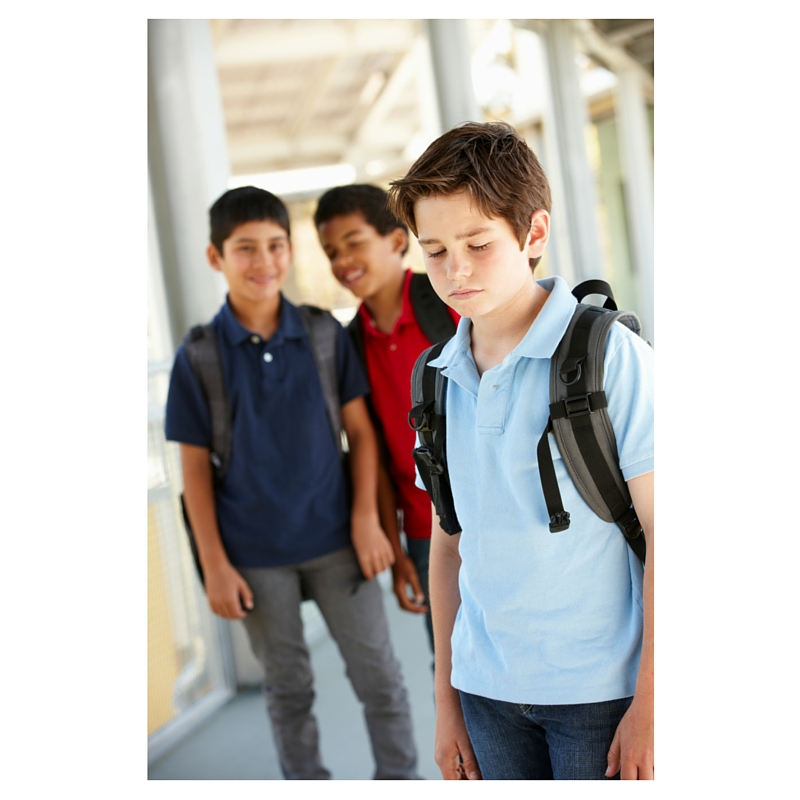
Threatening isn’t bullying—it’s criminal behavior that is against the law in any situation.
This is becoming more and more prevalent in our schools due to overcrowding, parents not monitoring their child’s school life for one reason or another and the overall moral decline of our nation. This is a good list of what to watch out for and actions to take if you believe your child is the victim of bullying.
Schools and districts take bullying a lot more seriously now than when we were in class, but unfortunately that doesn’t mean it has gone away. What has happened is there are now some actionable steps that will get results. If you find out your child is being bullied at school, here are the steps you should take.
· Support your child
It takes a lot of courage for them to come to you. Support their feelings about the incident and never suggest they could have done more or they should “toughen up”.
· Get as many details as possible
Reporting a bullying incident requires specifics. Names, dates, times, locations, and what was said/done are all needed. If there were witnesses, get their information as well.
· If a threat was made, contact the police
Threatening isn’t bullying—it’s criminal behavior that is against the law in any situation.
· Research the school’s anti-bullying policy
It might have been bad behavior, but the incident might not fit the definition of bullying.
· Cyberbullying
If the bullying is occurring online, make sure cyberbullying is covered in the school’s policy. It might not be. If not, most states now have legislation regarding online bullying. If that’s the case, the police need to be notified.
· Contact school personnel
Severity and regularity dictate who you talk to. One time, minor offense? The teacher is probably fine. Anything more than that, make an appointment with the principal.
· Relay the information calmly
No matter how angry you might be, you’ll be much more likely to be able to work with the school if you come off as rational.
· Work together to come up with a plan
There should be specific steps that everyone involved need to accomplish after the meeting is concluded. Write these down and confirm after the meeting. Everyone, especially the school personnel, need to be held accountable.
· Follow up
A lot of parents don’t ask for updates from their child. Give it about a week and ask what has happened. Also, if you haven’t heard from the school, now is the time to make sure they are doing their part.
· If bullying continues, move up the chain of command
Most districts have administration-level personnel that are responsible for anti-bullying steps. If yours doesn’t, the superintendent is the next step. Copy the principal on all correspondence.
If the district is ineffective, file charges with the police and the school board.
Have you ever wanted to write a letter to your child’s teacher and tell them how to help your child better or to just tell them off? Or maybe you have. Here is a great letter from an experienced, passionate educator to his students. This is an insightful look into a teachers response and thoughts how best to help his students help him. Very enlightening!
Every fall, I am struck by a profound sense of responsibility as parents drop their children off in my
classroom. Humbled by the mixture of faith and fear inherent in that moment, I meet moms and dads who hope that I will hold their children close, appreciate their unique traits, and help them inhabit their potential. Parents of unconventional learners have come to me with stories that have left them and their child in a state of academic PTSD. These parents count on me to invest in their children enough so that I can celebrate their abilities, understand their struggles, and, in some cases, help heal their childrens' school-based wounds.
However, even with the best intentions, I will occasionally move too fast, expect too much, miss a cue, drop a ball. I might even do all of those things with the same child (I really hope not). This is a hard truth to accept, particularly because I pride myself on being an educator who advocates for students with different learning profiles.
Over the past month, a trend has developed in social media. I refer to it as the "Dear Teacher Movement." Children with learning challenges, particularly dyslexia, have taken to the internet to
share letters they have written to their new teachers, communicating their hopes and dreams for the upcoming school year. In these poignant and frequently unsettling appeals, students wish to remind teachers they are trying (even when it may not look like that); that they are smart and capable (even if they struggle with certain skills); and that they have high aspirations for their own learning (which they hope their teachers will share). Implied in these letters are previous teacher failures that prompted students to share in this way.
Teaching is complex. We try hard to get it right, but sometimes we fail. Even with more than twenty-five years of teaching experience, I still have blindspots. I hope that my students know that I am not judging their potential by their spelling or speed, or confusing their school struggles with lack of effort. However, learning disabilities like dyslexia can make assessing a student's ability and effort more difficult. Often, I need my students' feedback to help me determine how to best meet their learning needs. This fall, inspired by the Dear Teacher letters, I decided to write a different kind of letter to my students at the launch of the school year.
Dear Student,
I am honored and thrilled to be your 5th grade teacher this year. I take my job very seriously, but despite my great effort and my good intentions, I sometimes fumble. Here are a few things that you should know.
1. I was not a perfect student and I don't expect you to be.
2. We all learn differently. This year I hope you will help me understand how you learn best.
3. Spelling well and reading fast make learning easier, but they have nothing to do with intelligence. I will help you become better spellers and readers, but intelligence is much more complex. Some of the best thinkers struggled with school skills. Please don't get discouraged if some skills are hard for you. It does not mean that you are stupid (at all). This year we will try to identify some strategies to make school work less frustrating.
4. Tell me if you are struggling. Effort can often be invisible. I wish I had a crystal ball, but I don't. Let me know if I assign something that feels overwhelming. That way, we can create effective supports or craft a workaround plan together.
5. Sometimes I go too fast. I get too excited or ambitious or impatient. When I do, remind me to slow down. Everyone in the class will appreciate it, including me.
6. I look forward to finding out what gets you up in the morning (besides your alarm). What are your dreams inside and outside of school? Let's try to connect them. That is where you will find the joy in learning.
Finally, sometimes school may not be easy, but it should never be miserable. Please don't suffer in silence.
Sincerely,
Kyle Redford
After reading this, how would you write to your child's teacher now? Any differences? Here at Athena, we know that children have different learning skills and vastly different learning styles. We do in depth analysis' to see exactly where they are at so we can help them the best. We come alongside your child's teachers to supplement and help them with what they are already learning. Our tutors ARE teachers and have experience in the struggles that all teachers (and students) face. Give us a call today and see how we can best help your child.